Most of Us Remember What Real Mangoes Taste Like. Our Children May Not
By Harsh Vardhan Thakur ·

Mango season in India is not just a harvest.
It’s a festival.
For many of us born in the 80s and 90s, mangoes carry memories:
- Summer vacations
- Grandparents
- Village homes
- Hot afternoons
- Trees taller than houses
- Mangoes ripening in straw
- Eating out of buckets
Last year, when my son was around one year old, he had the opportunity to eat the first mangoes of his life from our farm — Bhima Kamat – Natural Farming & Research, Araria, Bihar.
As a father, there was something deeply satisfying about knowing:
- where that fruit came from
- how it was grown
- what went into producing it
Those mango trees were planted during his great-grandfather’s time — between 70 to some over 100 years old now.
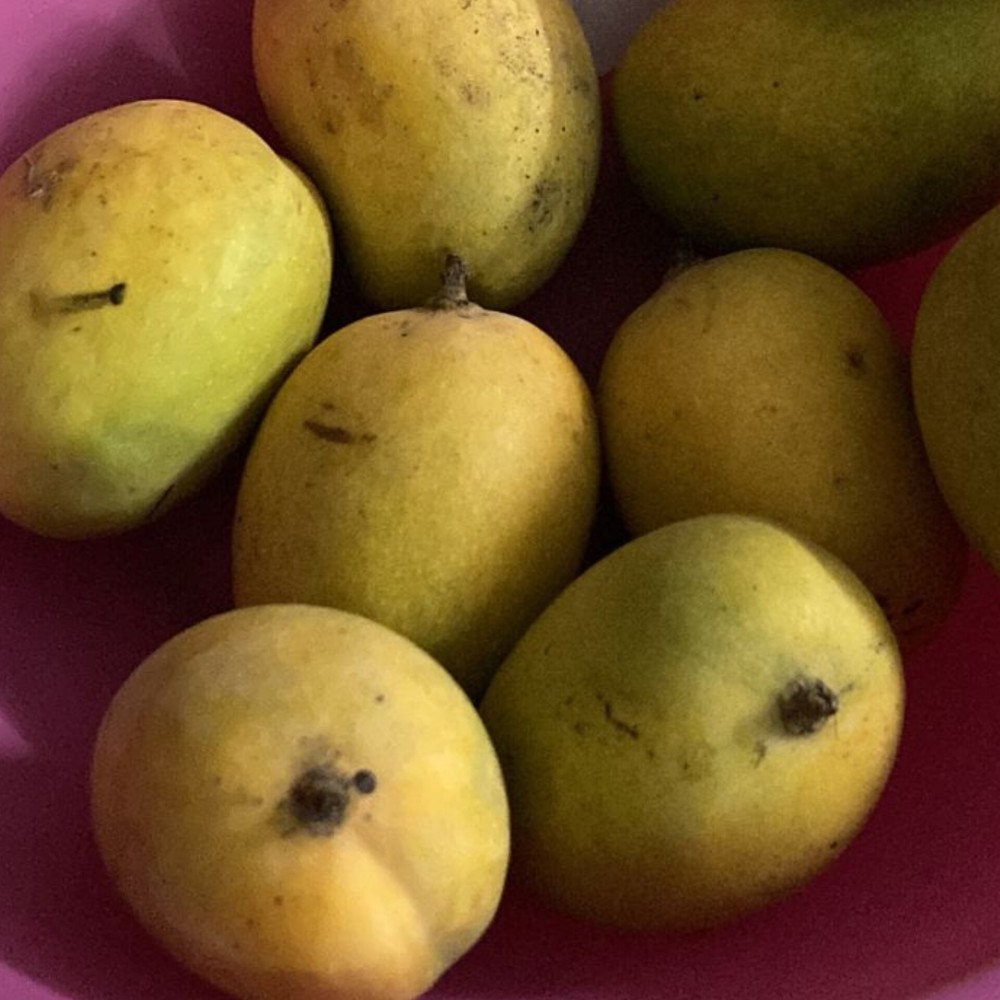
Bansariya Mango variety finds its name from nearby Bansar village and traces its legacy over 70 years at our farm
No chemicals have been used on the farm since we moved there in 2020.
Harvest begins only when a few mangoes naturally start falling ripe from the trees.
The taste, aroma and flavour were difficult to describe.
It was one of those “ZAPP memory” moments — like the tasting scene in the movie Ratatouille (2007).
A flavour that instantly reconnects you to something older, slower and more real.
Yesterday, almost a year later, at nearly two years old, I remotely watched him eat another mango — this time from a market in Delhi.
And somewhere between those two moments, this article was born.
Because this time, I had no idea:
- where the mango came from
- how it was grown
- when it was harvested
- how long it was stored
- whether it was chemically ripened
- what residues or treatments may have been used
Increasingly, consumers today are not just buying mangoes.
They are navigating:
- Artificial ripening
- Mislabelled varieties
- Long storage chains
- Chemical residues
- Food disconnected from seasonality and source
At the same time, I strongly believe that the foods we eat early in life shape:
- our gut microbiome
- taste memory
- food behaviour
- understanding of what “real food” should feel like
So this mango season, here are a few practical ways families can make better decisions — not perfectly, but more consciously.
1. Ask Questions About the Mango
Before buying, ask:
- Which variety is this?
- Which district or state did it come from?
- Is it naturally ripened?
- When was it harvested?
And wherever possible, cross-verify.
Good food systems become stronger when consumers ask better questions.
Trust and traceability begin with curiosity.
2. Understand Mango Seasons by Geography
Not every mango should be generally available everywhere at the same time.
Different regions have different harvest windows.
If mangoes appear unusually early, perfectly uniform, or available endlessly across seasons, ask how they were ripened and stored.
Systems optimized for:
- shelf life
- appearance
- transportation
are not always optimized for:
- flavour
- aroma
- nutritional integrity
Seasonality is not a weakness.
It is nature’s quality control system.
3. Stop Comparing Only “Price Per Kilogram”
This may be uncomfortable, but important.
Many consumers say:
“Natural farming or chemical-free mangoes are expensive.”
But expensive compared to what?
We often compare food only by:
- price per kg
- size
- appearance
Rarely by:
- nutritional density
- digestibility
- microbiome impact
- toxic load
- freshness
- traceability
Emerging research increasingly shows that soil quality, farming systems and post-harvest handling influence nutritional density and food quality.
The body does not simply need “more food”. It needs better nourishment.
Sometimes, a smaller quantity of nutrient-dense, naturally ripened food can be more satisfying than larger quantities of industrially optimized produce.
Instead of increasing your food budgets drastically, perhaps the transition can begin by gradually reallocating the same budget:
- away from unknown sourcing
- toward trusted and transparent systems
Eat less but eat good if not the best
Not perfection.
Just better decisions over time.
4. Washing Helps. But It Does Not Reverse How Food Was Grown.
A common myth:
“Just wash fruits properly and chemicals are gone.”
Washing helps reduce:
- dirt
- some surface residues
- field contaminants
But it does not reverse:
- how the crop was cultivated
- systemic chemical exposure
- artificial ripening processes
Similarly, soaking mangoes in room-temperature water may help:
- remove field heat
- reduce latex residue
- improve eating experience
But it is not a magical detox solution.
The more important question is:
What happened before the mango reached your kitchen?
5. Buy Closer to the Source Whenever Possible
One of the best food experiences is buying directly from a farm or orchard.
If not regularly, then occasionally:
- during vacations
- weekend drives
- farm visits
- through trusted farmer networks
You begin understanding:
- why every batch tastes different
- why weather matters
- why real food is never perfectly standardized
Food feels different when it has:
- a place
- a season
- a story attached to it
6. Learn to Value Taste Over Appearance
Perfect-looking fruit is not always the best fruit.
Naturally grown produce may vary in:
- colour
- size
- shape
- texture
Uniformity is often a logistics requirement, not a flavour indicator.
A real mango should smell alive before it looks perfect.
Many of us still remember that difference instinctively.
7. Support Systems That Reward Honest Farming
Good farming takes:
- patience
- labour
- observation
- discipline
- time
Increasingly, farmers are not just competing with chemicals.
They are competing with:
- distorted pricing
- adulteration
- artificial ripening
- blended products
- disconnected supply chains
This mango season, supporting:
- seasonal produce
- smaller value chains
- transparent sourcing
- trust-based systems
may genuinely matter more than we think.
Because food should not become so convenient that we completely disconnect from it.
Ironically, while writing this, our farm ecosystem in Bihar is itself recovering from multiple storms this season — damaging parts of our gaushala, bamboo infrastructure and orchards that took years to build.
All spring flush that would have translated into summer fruits including mangoes, litchis, longan, lemons and sweet lime has reduced to quantities that are economically unviable for long-distance shipping or commerce.
This year’s stock appears to be extremely limited and is mostly aligned to already existing demand.
But if you are building:
- consumer communities
- distribution channels
- transparent sourcing networks
for future seasons, feel free to connect with or tag Bhima Kamat – Natural Farming & Research .
Demand visibility today helps us align:
- farmers
- transition acreage
- production systems
- future planning
more intelligently for the years ahead.
And finally, gratitude.
To family, friends, well-wishers, consumers, fellow farmers and everyone who has supported or believed in this journey in some way.
Hopefully, this mango season, this article helps a few more families make slightly better decisions for themselves and their loved ones.
Because mango season should remain what it has always been:
A celebration!
#MangoSeason #Bihar #NaturalFarming #FoodSystems #FarmToFork #SeasonalEating #HealthyLiving #Agroecology #Traceability #RealFood #ConsumerAwareness #SustainableAgriculture #SummerInIndia #GutHealth